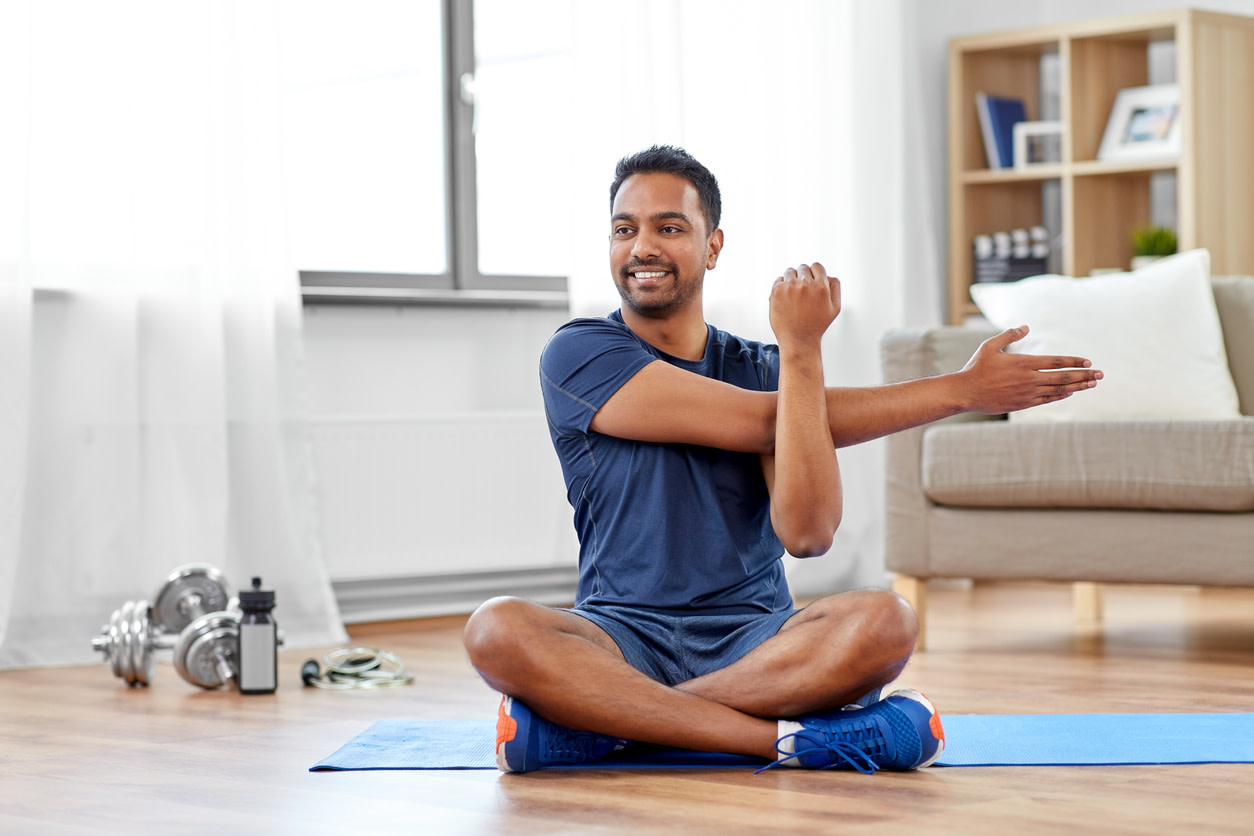
Starting exercise can feel harder than the exercise itself. If you have not worked out for a long time, you may not know which exercises to choose, how long to exercise, or whether you need equipment.
The good news is that you do not need a gym or an advanced workout plan to begin. Walking around your home, marching in place, doing controlled bodyweight exercises, and gradually increasing your activity can give you a practical starting point.
The most important goal at first is not to complete a difficult workout. It is to build a routine that your body can handle and that you can repeat consistently.
Start Smaller Than You Think You Need To
One of the most common beginner mistakes is trying to make up for months or years of inactivity with a hard workout.
That approach can leave you extremely tired, sore, or discouraged.
Instead, start with an amount of activity that feels manageable. The CDC recommends starting slowly and gradually increasing the amount of time or difficulty as your fitness improves.
For example, your first workout could be:
- 5 minutes of easy movement
- 5 minutes of simple exercises
- 5 minutes of slower movement to finish
If 15 minutes feels too difficult, start with less. Your starting point does not need to match someone else’s.
The goal is to establish the habit first.
What You Need for a Beginner Home Workout
You can start without buying fitness equipment.
A useful beginner setup may include:
- Comfortable clothing
- Supportive shoes when appropriate
- A little open floor space
- A stable chair
- Water nearby
- A timer or phone
If you use a chair for exercises such as sit-to-stands, make sure it is stable and does not have wheels. The NHS specifically recommends a solid, stable chair for chair-based strength exercises.
You do not need expensive weights, machines, or supplements to begin moving more.
Choose Three Types of Movement
A simple beginner routine can include three broad types of activity:
- Easy aerobic movement
- Basic strength exercises
- Gentle mobility or stretching
You do not need to master all three immediately. They can be introduced gradually.
1. Easy aerobic movement
Aerobic activity increases your breathing and heart rate.
At home, you could try:
- Walking around the house
- Marching in place
- Stepping from side to side
- Dancing at an easy pace
- Walking up and down a safe hallway
- Following a beginner-friendly low-impact exercise video
Walking is a particularly simple starting option. The CDC identifies walking as one practical way for many people to become more physically active.
2. Basic strength exercises
Strength training does not have to mean lifting heavy weights.
Beginners can start with controlled movements such as:
- Sit-to-stand from a stable chair
- Wall push-ups
- Bodyweight squats to a comfortable depth
- Standing calf raises
- Glute bridges if getting down to the floor is comfortable
The purpose at first is to learn how to control the movement rather than perform a large number of repetitions.
The NHS provides beginner strength exercises that can be performed at home and recommends building up repetitions gradually.
3. Gentle mobility
Mobility work can help you move through comfortable ranges of motion.
You might spend a few minutes doing gentle:
- Shoulder movements
- Arm circles
- Ankle movements
- Hip movements
- Torso movements
Do not force a stretch or push into sharp pain.
Try This Simple First-Week Routine
If you are completely new to fitness, you can begin with a very simple schedule.
Day 1: Easy movement
Spend about 10–15 minutes walking around your home or marching gently in place.
Keep the pace comfortable.
Day 2: Basic strength
Try:
- 5–8 chair sit-to-stands
- 5–8 wall push-ups
- 8–10 calf raises
- A short period of easy walking
Do one set of each exercise.
Day 3: Recovery or light movement
You do not have to perform a formal workout.
Take a short walk around your home and spend a few minutes moving your shoulders, ankles, and hips gently.
Day 4: Easy aerobic activity
Try another 10–20 minutes of comfortable walking, marching, or low-impact movement.
Day 5: Basic strength
Repeat a few beginner exercises from Day 2.
If they felt easy, you can add a small number of repetitions. If they felt difficult, keep the same amount.
Day 6: Optional light activity
Choose something you enjoy, such as walking, gentle dancing, or another easy activity.
Day 7: Rest
Rest is part of building a sustainable routine.
This is only a starting example. You can adjust the days and duration according to your current abilities.
How Hard Should a Beginner Workout Feel?
You do not need to exercise until you are exhausted.
For moderate-intensity activity, a useful general guide is that your breathing becomes faster and you feel warmer, while you can still talk but would have difficulty singing. The NHS uses this as one simple way to describe moderate intensity.
When you are just starting, much of your activity can be easier than this.
Think about the difference between:
Too easy: You barely notice that you are moving.
Manageable: You are breathing more quickly but can control your movement and speak normally.
Very hard: You are struggling to maintain the activity.
There is no need to spend your first weeks constantly working at the hardest level.
Warm Up Before More Demanding Exercise
A short warm-up can help you transition from rest into exercise.
Before a beginner workout, spend several minutes with easy movements such as:
- Walking slowly
- Marching gently
- Moving your arms
- Doing controlled shoulder rolls
- Gradually increasing your walking pace
The CDC recommends learning appropriate warm-up and cool-down practices when concerned about injury and choosing activities that match your abilities.
Your warm-up does not need to be complicated.
Do Not Worry About Reaching 150 Minutes Immediately
For adults, current physical activity guidelines recommend at least 150 minutes of moderate-intensity aerobic activity per week, or an equivalent amount of vigorous activity, along with muscle-strengthening activities on at least two days per week.
However, that is a longer-term guideline, not a requirement for your very first workout.
If you currently do almost no exercise, trying to complete 150 minutes during your first few days may make the routine unnecessarily difficult.
Start with manageable amounts and build gradually.
Even small amounts of physical activity are better than doing none, according to both CDC and WHO guidance.
How to Progress Without Overdoing It
Once your starting routine feels comfortable, change only one thing at a time.
You could gradually:
- Exercise for a few more minutes
- Add another walking session
- Perform a few more repetitions
- Add another set of an exercise
- Increase the difficulty slightly
- Introduce another type of movement
For example, if you comfortably walk for 10 minutes, you could eventually try 12–15 minutes rather than suddenly jumping to 45 minutes.
Progress does not have to be dramatic.
A routine that becomes slightly more challenging over time is easier to maintain than a routine that starts at an unnecessarily high level.
What Beginners Should Avoid
Starting with advanced workouts
You do not need burpees, jumping exercises, heavy weights, or complicated routines on your first day.
Choose movements you can perform with control.
Copying someone else’s workout
A workout designed for an experienced person may be inappropriate for someone who has been inactive.
Your starting point should reflect your own ability.
Exercising through pain
Muscle effort and tiredness are not the same as sharp or concerning pain.
Stop an exercise if it causes pain or makes you feel unwell. NHS exercise guidance also advises stopping exercise if you experience pain or become unwell.
Trying to change everything at once
You do not need a completely new diet, seven-day workout schedule, expensive equipment, and strict fitness goals on your first week.
Changing too many things can make the routine harder to maintain.
Start with movement.
What If You Feel Sore After Exercising?
Some beginners notice muscle soreness after starting unfamiliar activity.
If you are sore, you do not necessarily need to stop all movement. Gentle activity may be more comfortable than another demanding workout.
However, significant pain, an injury, or symptoms that concern you should not be treated as ordinary exercise soreness.
Give yourself enough recovery time and reduce the intensity if your body is not tolerating the routine.
If you repeatedly experience pain during exercise, speak with a qualified healthcare professional rather than simply pushing through it.
How to Make Home Exercise Easier to Stick With
The best workout routine is one you can realistically repeat.
Try connecting exercise to an existing part of your day.
For example:
- Walk for 10 minutes after breakfast.
- Do a short strength routine before your evening shower.
- March in place during a short break from work.
- Keep your exercise clothes where you can easily see them.
- Put your planned workout on your calendar.
The CDC recommends setting aside specific times for physical activity and choosing activities that fit your interests and abilities.
You can also track your activity with a simple note on your phone.
Record:
Date → Activity → Duration → How it felt
This gives you a clear record of progress without requiring complicated fitness apps.
When Should You Increase the Difficulty?
Do not increase the difficulty simply because a calendar says you should.
Instead, look at how your current routine feels.
You may be ready for a small increase when:
- The exercises feel controlled.
- You recover comfortably.
- Your current duration no longer feels challenging.
- You can complete the routine without excessive fatigue.
- You are consistently completing your planned sessions.
Increase gradually rather than making several changes at once.
When to Get Medical Advice Before Exercising
Many people can begin with gentle physical activity, but exercise plans are not one-size-fits-all.
Talk with a healthcare professional before starting or significantly changing an exercise program if you have a health condition, an injury, symptoms that concern you, or another reason you are unsure which activities are appropriate for you. The CDC and NHS both recommend seeking professional advice when health conditions or other concerns may affect exercise choices.
If you develop concerning symptoms during exercise, stop and seek appropriate medical advice.
Do not use a general online workout plan as a substitute for individualized medical guidance.
A Simple Beginner Home Workout
If you want something you can actually try today, keep it basic.
Warm-up
- 2 minutes of slow walking
- 1 minute of gentle marching
- 1 minute of easy shoulder and arm movements
Main workout
Complete one comfortable round of:
- 5–8 chair sit-to-stands
- 5–8 wall push-ups
- 8–10 calf raises
- 2–5 minutes of easy walking or marching
Finish
Walk slowly for a few minutes and allow your breathing to return toward normal.
If this feels too difficult, reduce the repetitions or duration.
If it feels very easy, resist the temptation to turn the first workout into a hard session. You can gradually increase the challenge in later workouts.
Frequently Asked Questions
Can I start exercising at home without equipment?
Yes. Walking, marching, wall push-ups, chair sit-to-stands, and other bodyweight movements can provide a simple starting point. Equipment can be added later if you decide you want it.
How long should a beginner exercise at home?
There is no single starting duration that works for everyone. If you are currently inactive, start with a manageable amount and gradually increase it. The long-term adult guideline is at least 150 minutes of moderate activity per week, but beginners do not need to reach that amount immediately.
Should I exercise every day when I am starting?
Not necessarily. A beginner can combine workout days with easier movement and rest days. The important part is gradually developing a regular pattern that your body can tolerate.
Is walking enough for a beginner?
Walking is an excellent way to begin becoming more active. As your routine develops, consider adding strength exercises because adult physical activity guidelines also recommend muscle-strengthening activity on at least two days each week.
What if I am too unfit to do normal workouts?
You do not have to begin with a traditional workout. Start with very easy movements, such as short periods of walking or marching, and increase your activity gradually. If you have a health condition or are unsure what activity is appropriate, discuss your starting plan with a healthcare professional.
Final Takeaway
Starting exercise does not require a gym membership, expensive equipment, or an intense workout plan.
Begin with movements you can perform safely and comfortably. A few minutes of walking, simple strength exercises, and gentle mobility work can give you a practical starting point.
As your body becomes accustomed to regular activity, gradually increase the time or difficulty. For adults, the longer-term goal is generally at least 150 minutes of moderate aerobic activity each week plus muscle-strengthening activity on two or more days, but getting started with a smaller amount is perfectly reasonable.
The goal of your first week is not to become fit overnight. It is to make exercise feel like a normal part of your routine.
Sources
- CDC — Steps for Getting Started With Physical Activity
- CDC — Adult Activity: An Overview
- World Health Organization — Physical Activity
- NHS — How to Be More Active
- NHS — Strength Exercises
Medical note: This article provides general educational information and is not a substitute for individualized medical advice. If you have a medical condition, injury, concerning symptoms, or uncertainty about starting exercise, consult an appropriate healthcare professional.